
Gorillaz album: Review of The Mountain

Introduction
Gorillaz released a new album called The Mountain that was released of this year in 2026. The band members, consisting of Damon Albarn and Jamie Hewlett, alongside multiple musicians, in the creation of their newest album. It is different from their other albums, with their approach more in line with South Asian musicalities and artists, while retaining their artistic roots and musicality to create a soft but new approach to their music. The album was created after the loss of their own fathers, as well as a trip to India, which inspired the creation of The Mountain.

In-depth Review of The Mountain
When listening to the beginning track from The Mountain, you are introduced to the melodical sounds from a Bansuri flute, as well as the rhythm from the Tablas and the Sarod. Afterwards, the Sitar plays the main melody, and we are introduced to a blend of electronic music and traditional Indian instruments. A whisper is heard near the end of the song, uttering, “The Mountain” and other sentences. As such, we are introduced to the next song, featuring a more electric, funk beat with the notable mixes that Gorillaz is known for incorporating into their music. The lyrics are riddled with West and South Asian references. In their song Damascus, which featured legendary Syrian Dabka musician Omar Souleyman, multiple cultural references to music and food were mentioned. One of the most important aspects of this album is the concept of death and the afterlife.

Throughout the album, the concept of death is embodied through the thought process of a person questioning their own morality and philosophy in 3rd person. Songs like The Hardest Things, Orange County, and The Sad God mirror that of death and letting go. Then there are songs like The Empty Dream Machine, where it focuses on the painful aspects of heartbreak through lucid imagery of South Asian imagery and mythology. Finally, the concept of redemption and reincarnation from sadness is evident in The Shadowy Light, where it incorporates South Asian singer Asha Bhosle in the beginning and end of the song. The album itself is like a letter to the musicians when addressing their own sorrows and pains from personal losses, but it also resonates with the listener as well. In fact, the album itself does not solely focus on death as an antagonist. Instead, it focuses on the journey of a person facing immense sadness and eventually reaching the peak of their journey. That is what the overall theme of the album is: it is the endurance of a person to be lifted from their sadness.
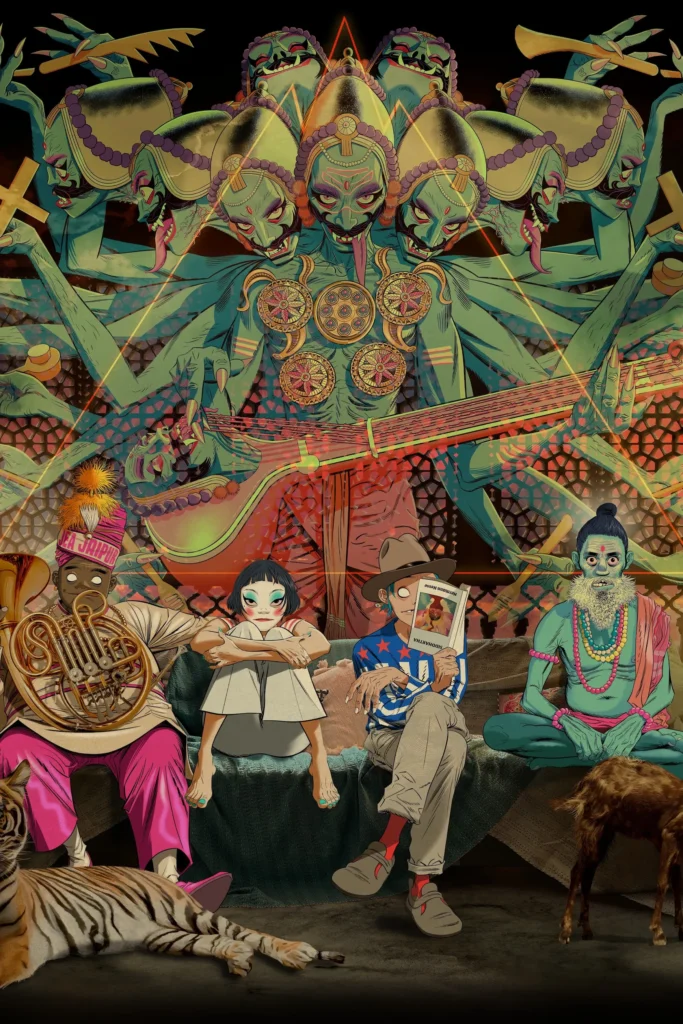
There is also this concept of reincarnation in connection with the mountain. In the song The Sweet Prince, the song describes a hero who is faced with inner turmoil due to grief.
One of the more recurring symbols throughout the album is the concept of The Mountain. There are multiple interpretations of what the mountain represents in the album. But the main idea of the mountain is the symbol of endurance that a person must face. It is very similar to the Hero’s Journey concept of a hero facing a challenge, which they must have endurance to overcome. As such, the album itself is the concept of dealing with grief, which is the challenge that must be defeated. Integrated with the idea of reincarnation, the reward for accepting loss is the idea that our loved ones will be reincarnated, as the circle of life renews once more.
The album is a fascinating album that was clearly thought out and executed beautifully. While mixing South Asian instruments and lyricism relating to other Asian cultures truly makes this album stand out through its innovation and story. Lastly, do check out 1883 Magazine for the in-depth interview with the band, as well as the beautiful promotional artwork that is created for the album.
Header photo is from Billboard.