Dead Internet Theory: What If Most of the Internet Isn’t Real?
Introduction
Remember when the internet was full of real people and man-made content? Some people are claiming it doesn’t feel like that anymore. In 2026, you might stumble upon a random YouTube channel that makes absolutely no sense or see dozens of Instagram accounts commenting the exact same phrases all over a video. You might even find thousands of accounts that don’t use human voices, pushing content that doesn’t feel like it was made for you or anyone at all. It really does feel like this lately, and this is exactly where the Dead Internet Theory comes in.
What is the Dead Internet Theory?
The theory claims that a significant portion of the internet is no longer made up of genuine human activity but instead consists of bots, automated accounts, algorithms, and artificially generated content.
It sounds like a conspiracy theory in many ways, it is. There is no solid evidence proving that the majority of the internet is entirely fake.
Is the Internet Actually Full of Bots?
The internet genuinely has a huge bot problem, but it’s more complicated than just saying “it’s full of bots.” There are several different layers to this:
- Automated bots: Search crawlers, spam bots, AI-generated accounts, advertising bots etc. These make up a very large amount of internet traffic.
- Bot-assisted humans: Some people use AI to write posts, comments, replies or run an entire account. The account is technically human-controlled, but the content doesn’t feel human.
- Harmless bots: Googlebots, monitoring bots, preview bots, etc. These are bots that create traffic on the internet, but not with the purpose of causing harm or generating fake content.
According to the 2026 Bad Bot Report by Imperva, 51% of internet traffic consists of bots. They categorize 37% as “bad bots” and 14% as “good bots,” leaving the remaining 49% to human users.
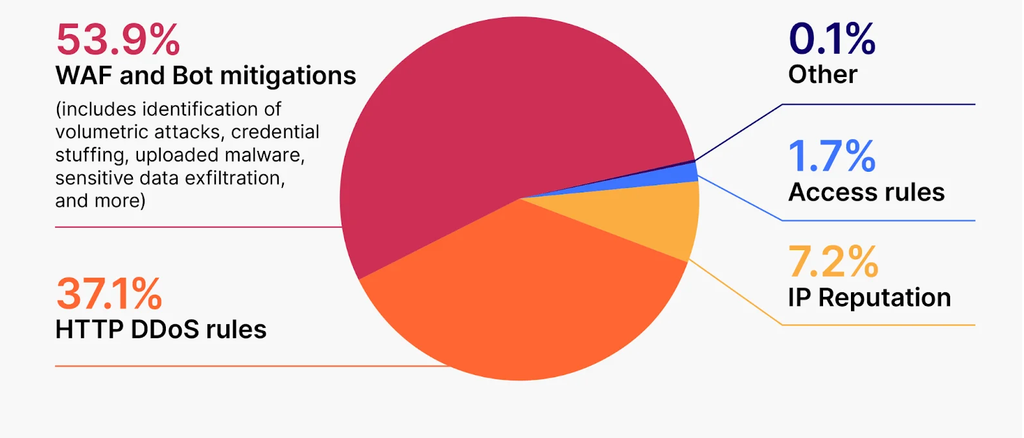
However, research from other companies shows varying results. For instance, Cloudflare’s 2024 report calculated bot traffic at 31.2% .
The Age of AI Slop
“AI slop” refers to low-quality, mass-produced content created with the help of artificial intelligence. It can include AI-generated images, videos, articles, social media posts, music and even entire websites. The term “slop” is used because this content is usually pumped out quickly and in huge quantities, with zero concern for originality, accuracy or quality.
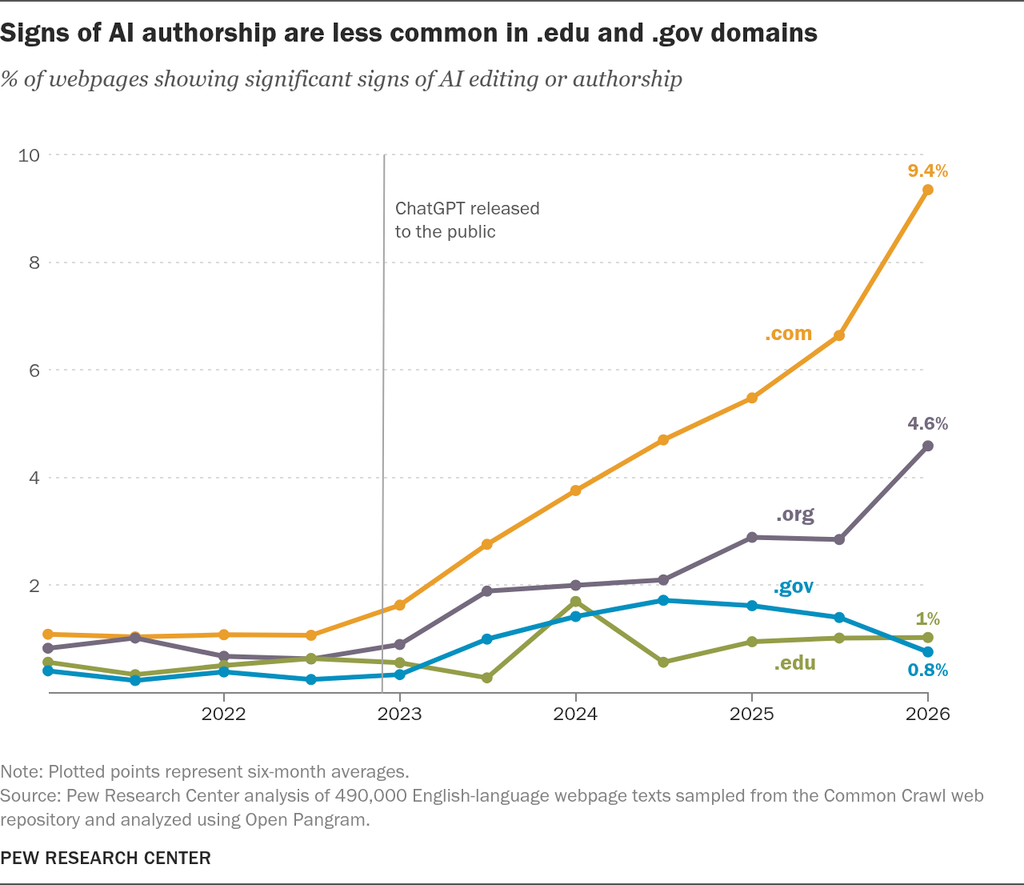
Based on research from the Pew Research Center:
- Roughly 10% of all English-language webpages in a July 2026 sample showed significant signs of AI authorship.
- Among pages published after ChatGPT launched, that figure was over one-third in July 2026.
Other studies highlight similar trends:
- A 2025 Ahrefs analysis of 900,000 newly detected webpages found that 74.2% contained some AI-generated content. However, only 2.5% were classified as “pure AI”; most were a mixture of human and AI content.
- A 2026 academic study using Internet Archive data estimated that about 35% of newly published websites by mid-2025 were AI-generated or AI-assisted.
- Another analysis found AI-generated or assisted websites reaching roughly 50% of newly published English-language URLs by late 2025, though detection methods and definitions obviously differ.
So… Is the Dead Internet Theory Actually True?
The short answer: not literally.
Search engine crawlers, AI data collectors, spam bots, security bots, automated accounts and malicious bots constantly interact with websites. The content on the internet just feels different now because of all the AI-generated material. AI-generated music, pictures, videos, and articles create a very different vibe compared to the early days of the internet.
Even social media engagement can be faked. Bots and automated accounts can easily generate likes, views, comments and followers. Some comments even look like they were written specifically to make an automated account appear active. In fact, users across platforms like Instagram, YouTube and Facebook have been constantly complaining about bot comments, spam, and the spread of false information.
The Dead Internet Theory doesn’t necessarily have to be literally true to describe something real. The internet can still be full of humans while feeling a lot less human.
This doesn’t prove the Dead Internet Theory is a 100% reality. But it’s hard to say it’s completely false, either. The internet isn’t the same as it used to be. Still, the web isn’t just blindly following the lead of the bots; it is following the lead of the humans who either made the internet great in the first place or chose to fill it with bots.
The internet might get worse in a few years, living up to the theories about AI agents talking to each other and generating all the content. Or humanity might lead the internet down a better path by mixing genuine creativity with AI tools and securing the web with good security bots.
To learn more about generative AI, you can read our article here: